 Robotically Manipulated Payload Challenge
NASA Flight Opportunities invites applicants to propose payloads that can be manipulated by a robotic arm in low Earth orbit.
Advancing persistent infrastructure for in-space servicing, assembly, and manufacturing.
Video for illustrative purposes only
About the challenge
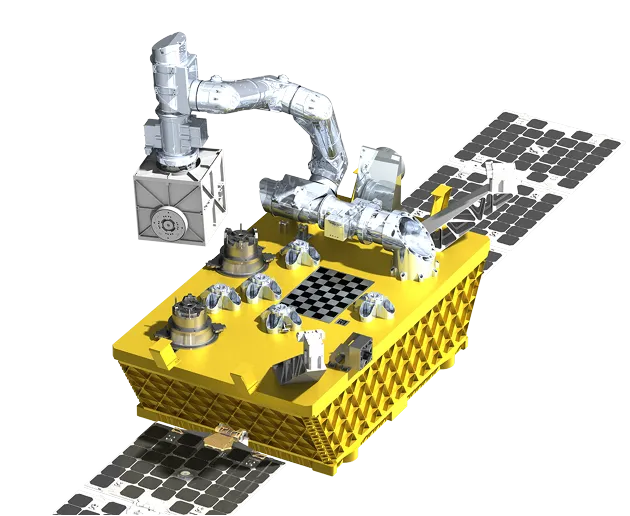
The Robotically Manipulated Payload Challenge — the fifth in the NASA TechLeap Prize series — is a competition to advance persistent infrastructure for in-space servicing, assembly, and manufacturing. NASA Flight Opportunities invites applicants to propose a payload that can be manipulated by a robotic arm in low Earth orbit. Up to three winners will each receive up to $500,000 to develop a flight-ready payload. In addition, NASA intends to provide an opportunity for the winning teams to demonstrate their payload in orbit (at no additional cost). These TechLeap payloads will fly aboard an orbital spacecraft that will rendezvous with the Fly Foundational Robots (FFR) platform already in orbit. The FFR mission is expected to launch in late 2027, and the TechLeap payloads are slated to launch in early 2028.
Timeline
Across three phases, applicants will move from ideation to payload build over 12 months. The timeline for this challenge is intentionally rapid, with the goal of increasing the pace of space.
Challenge launch
May 20, 2026
NASA Community of Practice webinar
June 3, 2026
Virtual information session
June 18, 2026
We are here
Phase 1 registrations close
July 29, 2026
Phase 1 submissions close
August 12, 2026
Phase 1 winner announcement and Phase 2 start
September 2026
Phase 2 winners announcement and Phase 3 start
December 2026
Phase 3 winners announcement
May 2027
Award pool
The Robotically Manipulated Payload Challenge will select up to three winners, each of whom will receive up to $500,000 in prizes. In addition, NASA intends to provide each winner with a hosted orbital flight test at no additional cost, enabling their payload to interact with a robotic arm in low Earth orbit.
Learn more about the robotic arm, examples of manipulation demonstrations, and payload requirements to prepare your submission.